WALKER PRODUCTS 200-1058 Throttle Position Sensor 724620052583
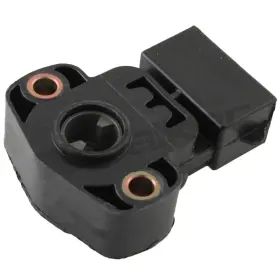
( Brand: Walker Products ), ( Manufacturer Part Number: 200-1058 ), ( Part Type: Throttle Sensor ), ( Terminal Type: Blade ), ( Connector Gender: Female ), ( Mounting Hardware Included: No ), ( Material: Plastic ), ( Connector Shape: Oblong ), ( Terminal Gender: Male ), ( Manufacturer Warranty: 3 Months ), ( Throttle Body Mounted: Yes ), ( UPC: 724620052583 )
Review WALKER PRODUCTS Throttle Position Sensor
Introducing the Walker Throttle Position Sensor 200-1058, a critical component of your vehicle's fuel delivery system designed to ensure optimal engine performance. This sensor is engineered to accurately monitor and transmit data regarding your engine's throttle position to the powertrain control module (PCM). As a result, it plays a crucial role in determining the correct amount of fuel to be injected into the engine for smooth and efficient combustion.
The Walker 200-1058 Throttle Position Sensor is meticulously crafted using advanced technologies and materials to deliver unparalleled precision and durability. Its compact design allows for easy installation, while its robust construction ensures reliable operation even under the most demanding driving conditions. This sensor utilizes a high-precision potentiometer that provides a voltage output proportional to the throttle position, enabling your engine to maintain optimal performance and fuel efficiency.
This Walker Throttle Position Sensor is compatible with a wide range of vehicles and applications, offering versatility and convenience for vehicle owners. Its plug-and-play design ensures a hassle-free installation process, making it an ideal choice for DIY enthusiasts and professional mechanics alike. With its high-quality construction and proven performance, the Walker 200-1058 Throttle Position Sensor is an essential addition to your vehicle's maintenance arsenal.
In summary, the Walker 200-1058 Throttle Position Sensor is a critical component of your vehicle's fuel delivery system, designed to accurately monitor and transmit throttle position data to the powertrain control module for optimal engine performance. Its advanced technologies, compact design, robust construction, and versatility make it an essential addition for any vehicle owner seeking reliable and efficient engine operation.
Buying a Throttle Position Sensor (TPS) like the Walker 200-1058 can be a crucial decision for vehicle owners, especially those experiencing issues with their engine's performance or check engine light. Here are some potential pros and cons to help you make an informed decision:
Pros:1. Improved Engine Performance: A faulty TPS can lead to poor engine performance, rough idling, and stalling. Replacing it with a new sensor can help restore optimal engine performance.
2. Check Engine Light: If your vehicle's check engine light is on, it could be due to a malfunctioning TPS. Replacing the sensor can help turn off the light and prevent potential damage to other engine components.
3. Cost-Effective: Replacing a TPS is generally less expensive than other major engine repairs. The Walker 200-1058, for example, is priced affordably, making it an attractive option for budget-conscious vehicle owners.
4. Easy Installation: The TPS is a relatively easy component to replace, and most mechanics or DIY enthusiasts can do it in under an hour.
Cons:1. Potential for False Positives: A new TPS does not guarantee that the check engine light will not come back on. In some cases, other issues within the engine or wiring system might cause the sensor to malfunction again.
2. Limited Longevity: Like all automotive components, a TPS has a limited lifespan. Replacing it now does not ensure that it will last indefinitely, and you may need to replace it again in the future.
3. Diagnostic Challenges: In some cases, a faulty TPS might not cause the check engine light to come on, making it difficult to diagnose the issue. This could lead to unnecessary replacement costs or a prolonged period of vehicle downtime.
Conclusion:The Walker 200-1058 Throttle Position Sensor is a cost-effective and relatively easy-to-install solution for addressing potential engine performance issues or a check engine light. However, it is essential to understand that a new TPS does not guarantee a permanent solution and may not prevent false positives or future replacements. Vehicle owners should carefully consider the potential pros and cons before deciding to purchase and install a new TPS.
Recommendation:If you are experiencing engine performance issues, a check engine light, or other symptoms that might be related to a faulty TPS, it may be worth considering a replacement. However, before making a purchase, it's essential to ensure that a faulty TPS is indeed the root cause of the issue by consulting a qualified mechanic or performing a thorough diagnostic test. By taking a thoughtful and informed approach, you can help ensure that your repair dollars are well-invested and that your vehicle will return to optimal performance.
Details:
Enhanced Engine Performance: TPS contributes to optimal ignition timing and fuel injection, resulting in improved engine performance, increased power output, smoother operation. If the sensor malfunctions, it can trigger error codes, making easier to identify and make real-time adjustments. Optimized Transmission Shifts: TPS data can aid in optimizing automatic transmission shifts, leading to smoother gear changes and improved driving comfort. Reduced Emissions: TPS assists in maintaining the correct air-to-fuel mixture, which turn helps reduce harmful emissions, enhance fuel efficiency, gas consumption.
Diagnostic Capability: TPS are crucial for diagnosing engine issues based on the voltage signal interpreted by ECU.
part #: 2001058 prices
- $43.13-$172.05
specifications airfueldepo:
- brand: Walker Products
- mpn: 200-1058
- part type: Throttle Sensor
- terminal type: Blade
- connector gender: Female
- mounting hardware included: No
- material: Plastic
- connector shape: Oblong
- terminal gender: Male
- manufacturer warranty: 3 Months
- throttle body mounted: Yes
- upc: 724620052583
payments airfueldepo:
- other
- credit card: Visa
- wallet: Google-pay
offer airfueldepo:
- options: Ship-to-home
- started: May 2, 2025
- availability: In Stock
- sold: 0
general airfueldepo:
- Car Truck Parts Accessories > Air Fuel Delivery > Other Air Fuel Delivery
- condition: New
returns airfueldepo:
- paid by: Buyer
- time: 30 Days
- policy: Returns Accepted
shipping airfueldepo:
- service: USPS Ground Advantage, UPS Ground, FedEx 2Day One Rate Medium Box
- cost: $5.00
- carrier: USPS, UPS, FedEx
- transit: 4-8 Days
- class: Standard, Expedited
- type: Fixed
seller airfueldepo:
- rating: 100.0%
- city: Pacific, Missouri
- # reviews: 125
Walker Products 200-1058 Is Similar To:
- Walker Products 341xa59 Fuel Line Retainer For 1985 1987-1988 Ford E-150 Econoline (39.7% similar) Direct fit connectors. Important: please review fitment notes to ensure proper fit. 1985 ford E-150 online engine: 4.9L L6;. Direct fit replacement. Shipping handling service: please refer to shipping section. 1985 ford E-150 online engine: 5.0L V8;. Fuel line retainer Walker for...(December 12th, 2024)
- Walker 62021my Air Charge Temperature Sensor Connector For 1999-01 Isuzu Vehicross 3.5l (32.4% similar) 1999 Isuzu Velcros engine: 3.5L V6;. Shipping handling service: please refer to shipping section. 2000 Isuzu Velcros engine: 3.5L V6;.: Walker air charge temperature sensor connector for 1999 -01 Isuzu Velcros 3.5L: brand: product, warranty: 1 year, part type: connector...(December 14th, 2024)
- Walker 81679ez Electronic Throttle Body Actuator Connector For 2003-2007 Ford Focus (34.8% similar) Shipping cost: free. 2003 ford focus engine: 2.3L L4;.: Walker electronic throttle body actuator connector for 2003 -2007 ford focus: brand: product, warranty: 1 year, part type: connector, electrical pigtail. Shipping handling service: please refer to shipping...(December 16th, 2024)
- Walker Products Sx-7tez Mass Air Flow Sensor Connector For 2009-2010 Pontiac Vibe 2.4l L4 Lc (42.6% similar) Walker mass air flow sensor connector for 2009 -2010 Pontiac vibe 2.4L l4 LC: status: in stock...(April 1st, 2025)
- Walker Products Sx-pxq6 Air Charge Temperature Sensor Connector For 1996-2006 Nissan Altima Fr (40.6% similar) Walker air charge temperature sensor connector for 1996 -2006 Nissan ultimo fr: status: in stock...(April 1st, 2025)
- Walker Products 270-1057 Fuel Injection Idle Air Control Valve Connector Fits 1991-1995 Mercury Sable Mys (44.2% similar) For example, BMW does not manufacture parts, they assemble parts from many parts manufacturers into a finished vehicle. This part fits vehicles made in the following years 1985 ,1986,1987,1988,1989,1990,1991,1992,1993,1994,1995,1996,1997. This may be an oem product...(May 31st, 2025)
- Walker Products Sx-1w1b Fuel Injection Idle Air Control Valve Connector For 1995-2011 Ford Ti (42.3% similar) Walker fuel injection idle air control valve connector for 1995 -2011 ford ti: status: in stock...(August 1st, 2025)
- Walker Products Sx-f0ar Throttle Position Sensor Connector For 2006-2007 Mitsubishi Raider Fv (60.6% similar) Walker throttle position sensor connector for 2006 -2007 Mitsubishi raider VF: status: in stock...(September 29th, 2025)
- Walker Products 270-1064 Throttle Position Sensor Connector (85.2% similar) This part fits vehicles made in the following years 1995 ,1996,1997,1998,1999,2000,2001,2002,2003, 2004 ,2005,2006,2007,2008,2009,2010. Part numbers. Walker Products. Throttle position sensor connector. 1P1962, PT2168, S1935...(March 14th, 2026)
- Walker Products 270-1022 Throttle Position Sensor Connector (85.2% similar) Features: direct fit. Placement on vehicle: front. Radiators and cooling. Tire chains and accessories. Upc: manufacturer part number: 270-1022. Rotating electrical. Terminal type: pin. Mpn: 270-1022. Caution: fitment is for north America vehicles.: throttle...(March 23rd, 2026)
- Walker Products Sx-03s2 Fuel Injection Idle Air Control Valve Connector For 1995-2004 Lincoln Li (38.6% similar) Walker fuel injection idle air control valve connector for 1995 -2004 Lincoln li: status: in stock...(March 29th, 2026)